
When a production line goes down, the pressure to troubleshoot energized is immediate. That's the moment NFPA 70E matters most. It's also the moment most manufacturing facilities are least prepared for.
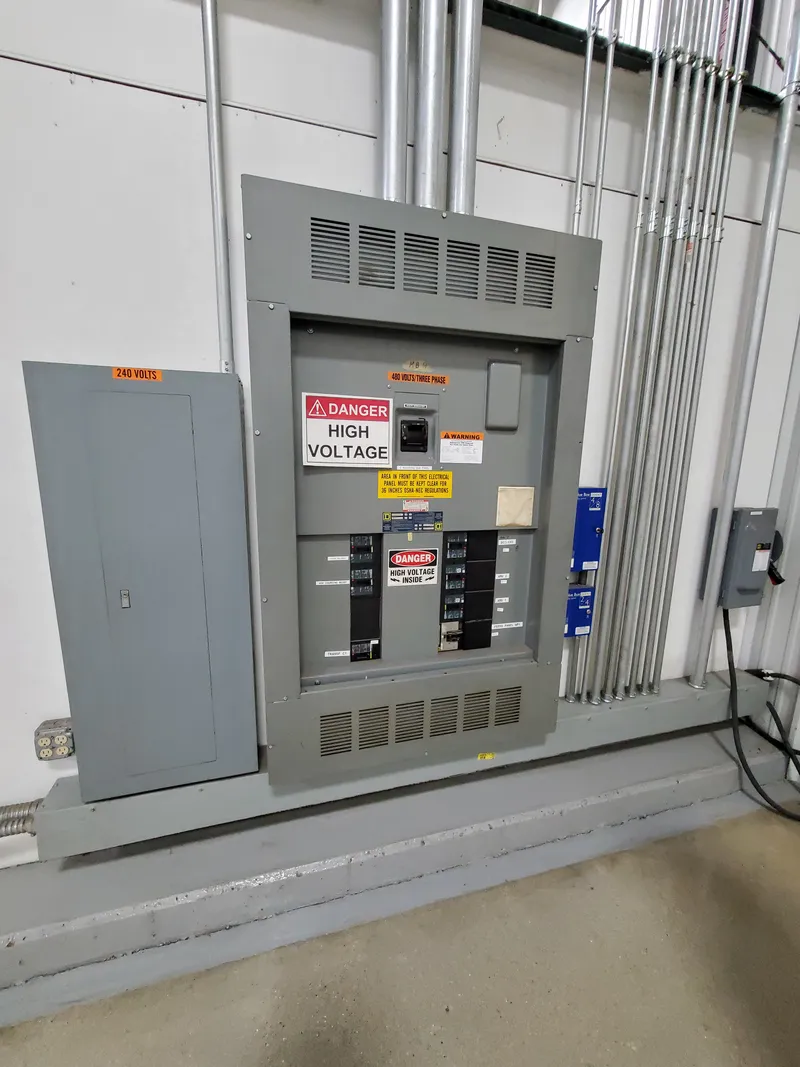
A commercial building with one main switchgear and a handful of panels is a straightforward study. A manufacturing facility with motor control centers, large transformers, process equipment, and workers under production pressure is a different situation. The code requirements are identical. The execution is where most facilities fail.
Why Manufacturing Is a Different Problem
Fault current is higher. Manufacturing facilities run larger transformers and heavier utility feeds to support motor loads. That drives incident energy up at the equipment. Sometimes significantly above what generic PPE category tables assume.
Here's something that catches people off guard: lower fault current doesn't always mean lower incident energy. If a protective device doesn't operate in its instantaneous region, clearing time gets longer and incident energy goes up. Fault current alone doesn't tell the full story.
There's more equipment to cover. Motor control centers, VFDs, switchgear, distribution panels, process-specific equipment. Every piece that workers interact with while energized needs to be evaluated. In a manufacturing environment that list gets long fast.
Systems get modified constantly. New equipment gets added. Transformers get swapped. Protective device settings change. Most manufacturing facilities have electrical infrastructure that's been built up over decades without anyone keeping the one-line current. By the time we show up, the diagram on the wall often doesn't match what's actually installed.
Production pressure drives bad decisions. This one doesn't show up in compliance documents but it's real. When a line is down, the pressure to troubleshoot energized is enormous. NFPA 70E 130.2 requires a documented energized work permit with a written justification every time. In practice that process gets skipped when it matters most.
Not everyone working near the equipment is qualified. Maintenance, contractors, operators. Multiple trades in the same space, not all of them electrically qualified, and the arc flash boundary doesn't care about job titles.
What NFPA 70E Actually Requires
The requirements don't change based on industry. What changes is how hard they are to actually meet.
Arc flash risk assessment on all equipment (NFPA 70E 130.5). Every piece of equipment likely to require examination, adjustment, or maintenance while energized has to be evaluated. In practice, most equipment that may require interaction while energized needs to be evaluated.
Equipment labeling (NFPA 70E 130.5(H)). NFPA 70E requires equipment labeling as part of the arc flash risk assessment process. Related installation and inspection requirements also appear in NEC Section 110.16 for applicable equipment. Labels used in practice commonly include nominal voltage, arc flash boundary, incident energy or minimum arc rating, and the assessment date, consistent with current industry practice and enforcement expectations. A label that just says "WARNING: ARC FLASH HAZARD" doesn't meet current requirements and doesn't give workers what they need to select PPE.
Energized work permits (NFPA 70E 130.2). Energized work requires justification and, in most cases, a documented permit when interacting with exposed energized conductors. Most facilities have a permit program on paper. Whether it's actually followed when a line goes down is a different question.
Qualified workers (NFPA 70E 110.2). Qualification is task-specific and equipment-specific. Being a licensed electrician doesn't automatically qualify someone for every task on every piece of equipment.
PPE tied to actual incident energy. The PPE category method only applies when the equipment falls within the fault current and clearing time limits in the applicable PPE category tables in NFPA 70E. A lot of manufacturing systems exceed those limits. When that happens, the category method is not valid and an incident energy analysis is required. Most facilities that rely on the category method have never verified whether their system actually qualifies for it.
Where Most Manufacturing Facilities Fall Short
The study is outdated. NFPA 70E requires the analysis to be reviewed every five years and updated whenever system changes could affect the results. Transformer replacements, new equipment, utility upgrades, protective device setting changes all qualify. Most manufacturing facilities are running on a study that no longer reflects their system. The labels look current. The data behind them isn't.
Mismatched and over-duty equipment discovered during the study. This comes up more often than most facilities expect. When we do arc flash studies on existing manufacturing facilities, we regularly find circuit breakers that were added or replaced over the years that don't match the interrupting capacity of the rest of the system. A breaker with an AIC rating below the available fault current at that point is a serious problem. This isn't a labeling issue. We've walked into facilities where small modifications were made over decades, each one seeming minor at the time, and the cumulative result is equipment that is no longer rated for the fault current the system can deliver. The arc flash study surfaces this because we're calculating available fault current at every point in the system. When that number exceeds the interrupting rating of the installed breaker, it gets flagged and has to be addressed before we finalize the study.
The category method is being applied where it doesn't apply. The tables have specific fault current and clearing time parameters. If your system exceeds them, the table doesn't apply. You need an incident energy analysis. Most facilities using the category method have never verified whether their system actually qualifies for it.
Workers are underprotected at high-energy equipment. When PPE gets selected by assumption instead of calculation, the margin disappears. Category 2 gear at a panel running 15 cal/cm² is a problem. The label may not say 15 cal/cm² because the study is old or the category method was used without verification. Either way, the worker doesn't know.
The permit program exists on paper only. When the line is down, permits don't get written. This is the reality in most manufacturing environments. That's exactly when the hazard is highest.
Coverage stops at the main gear. Studies often cover the main switchgear and primary distribution and miss equipment further into the system. MCC buckets, individual disconnects, process control panels. If workers interact with it energized, it needs to be in the study.
How the Study Process Works
The starting point is the one-line diagram. For most manufacturing facilities we work with, the one-line typically requires field verification before it can be relied on for modeling. Transformer sizes, conductor runs, protective device types and settings, available utility fault current. We confirm what's actually installed before we model anything.
From there we run a short circuit study to establish available fault current at each point in the system. That feeds into a coordination study to determine actual clearing times for each protective device. Both are required inputs for the arc flash calculation.
The arc flash calculation runs per IEEE 1584-2018 methodology, which accounts for enclosure size, electrode configuration, and conductor gap in addition to fault current and clearing time. The output is incident energy in cal/cm² at each equipment location, arc flash boundary, and minimum PPE arc rating.
Labels get produced for each piece of equipment based on the calculated values. Not table assumptions.
How This Works in Practice
Before we finalize labels, we talk through PPE inventory with the client. If a facility already has arc-rated gear at a specific rating, we align the study deliverables with what they have so they're not buying equipment they don't need. For facilities starting from scratch, we label based on the full calculated incident energy and give them a clear baseline for procurement.
We also flag equipment where engineering controls make more sense than higher-rated PPE. Protection coordination improvements, maintenance switching, arc flash relays. NFPA 70E prioritizes hazard elimination and reduction over PPE, but most facilities default to PPE because it's easier. If the better answer is reducing the hazard rather than suiting up for it, we'll say so.
Labels should reflect the calculated hazard and how the facility actually operates. Not generic categories and not assumptions.
The Bottom Line
Manufacturing facilities have the most complex arc flash compliance picture of any sector we work in. Large systems, high fault currents, aging infrastructure, production pressure. Generic compliance advice doesn't cover it.
If your study is more than five years old or your system has changed since it was done, your labels are based on data that may no longer be accurate. That's where most facilities are exposed. That's where we come in.
For a practical overview of the broader compliance picture beyond arc flash, see our top 5 electrical safety compliance tips for manufacturers.
Contact Zech Engineers or call 651-308-7255. Our studies are PE-stamped, IEEE 1584-2018 compliant, and produce labels that align with 2026 NEC Section 110.16 and NFPA 70E requirements.
Need an Arc Flash Study?
Send over your one-line diagram or a brief system description. We will review it and provide a clear project schedule, fixed fee, and defined scope with no surprises.