
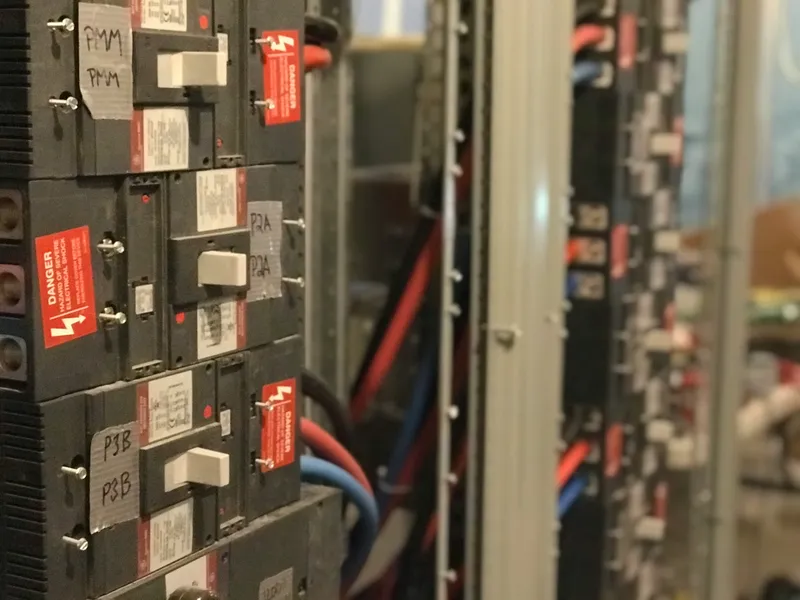
An arc flash happens fast. Faster than you can blink. In that fraction of a second, an electrical fault can release a blast of heat exceeding 35,000°F, vaporize copper conductors, and send molten metal flying across the room.
The aftermath isn't pretty: severe burns, damaged equipment, production shutdowns, and, in the worst cases, fatalities.
Yet many facility managers put off arc flash studies because they see the price tag first. Here's the thing: the study isn't the cost. The incident is.
What You Actually Get From an Arc Flash Study
An arc flash study (also called an incident energy analysis) answers a simple question: how bad could it get at each point in your electrical system?
We measure the potential energy exposure at every panel, switchgear, and disconnect. Then we determine:
- What PPE your workers need at each location
- How far back they need to stand (the arc flash boundary)
- Which equipment poses the highest risk
- Where you can reduce hazard levels through better coordination or faster-acting protection
The Process
- Field data collection: We document your panels, breakers, fuses, transformers, and cables. If your one-line diagrams are outdated (or missing), we create them.
- System modeling: We build your electrical system in engineering software and simulate fault conditions.
- Analysis: Short-circuit calculations, protective device coordination, and incident energy calculations at each location.
- Labeling: We create and apply arc flash warning labels that meet NFPA 70E requirements.
- Report and recommendations: You get a full engineering report, plus actionable steps to reduce hazard levels where possible.
What Does It Cost?
Straight talk: it depends on your facility. A small single-building operation is different from a sprawling industrial campus.
| Facility Size | Typical Range |
|---|---|
| Small (1 to 2 buildings, under 20 panels) | $3,500 to $7,500 |
| Medium (multi-building or industrial) | $7,500 to $18,000 |
| Large (campus, heavy industrial) | $18,000+ |
The variables that drive cost:
- Number of electrical panels and equipment
- Quality of existing documentation
- Equipment accessibility
- System complexity
We've seen companies try to cut costs by skipping field verification or using outdated drawings. That's a mistake. Inaccurate data means inaccurate labels, which defeats the entire purpose.
The Math That Matters
Let's be blunt about the alternative:
- Severe burn treatment: $1.5 million or more
- Legal settlements: $5 to $10 million (not uncommon)
- OSHA fines: Up to $156,259 per willful violation
- Equipment replacement: Varies, but often six figures
- Production downtime: Depends on your operation, but rarely cheap
Compare that to a study that costs a fraction of any single incident. The ROI isn't theoretical. It's straightforward risk management.
The Real Problem Isn't Usually the Equipment
Here's what we see in the field: most arc flash incidents don't happen because equipment failed. They happen because someone made an assumption.
- "It's just a quick task."
- "I've done this a hundred times."
- "The label says it's fine." (But the label is 12 years old and the system has changed.)
In fact, outdated labels are just one of the code violations regularly uncovered during studies.
Accurate, current labels, backed by real engineering data, take the guesswork out of the equation. Your team knows exactly what they're dealing with before they open that panel.
Staying Current
Arc flash studies aren't a one-time thing. NFPA 70E requires review every five years, and you should update sooner if:
- You add or modify electrical equipment
- Your utility changes transformer sizes or fault current availability
- You upgrade protective devices
- Load conditions shift significantly
Think of it like maintaining any other critical safety system. The data has to reflect reality.
And with the 2026 NEC now making detailed labeling inspector-enforceable, outdated studies will be harder to ignore.
How We Approach It at Zech Engineering
We're a small firm, which means you work directly with the engineers doing the analysis, not a sales team. Our arc flash studies are PE-stamped and compliant with NFPA 70E and IEEE 1584-2018.
What's included:
- On-site data collection (we don't rely solely on drawings)
- Full system modeling and incident energy analysis
- Coordination study to optimize protection
- Durable, professionally printed arc flash labels
- Detailed report with recommendations to reduce hazard levels
Have Questions or Want a Quote?
We'll give you a straight answer on what your facility needs.