
How much does an arc flash study cost? It's one of the first questions facility managers ask. The answer depends on your electrical system, but the biggest factor isn't square footage, it's scope. This guide explains what drives pricing, what a study should include, and how to estimate your own project before requesting a quote.
The biggest mistake is comparing arc flash study proposals by price without comparing scope.
That is where people get misled.
Two proposals can differ by $10,000 and both be reasonable if they are not pricing the same scope.
If you're looking for a quick estimate, you can also use our free Arc Flash Study Cost Estimator to get a ballpark price based on your facility.
Estimate Your Arc Flash Study Cost in About Two Minutes
Estimate your project cost in about two minutes using our free Arc Flash Study Cost Estimator.
Rough Cost Ranges
Without knowing a specific system, these are broad budgeting ranges:
- Small facilities run about $3,500 to $6,000 depending on scope
- Mid-size facilities run about $6,000 to $14,000 depending on field effort and deliverables
- Larger industrial or campus facilities run about $14,000 to $22,000 or more depending on system size and engineering scope
These are broad budgeting ranges, not fixed pricing. Actual pricing depends on field verification, documentation quality, one-line development, coordination scope, labels, and system complexity.
Cost depends more on scope than facility size alone.
What Actually Drives the Cost
Number of buses in the study
This is often the primary cost driver.
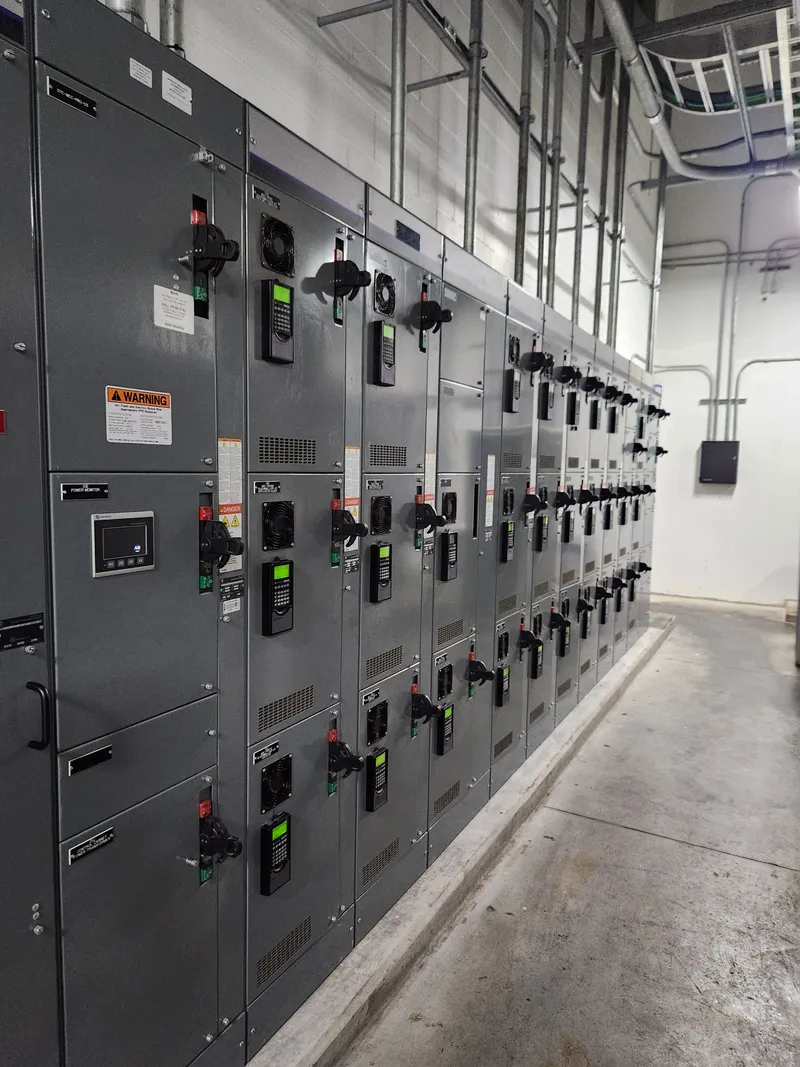
A bus is any point in the system where fault current gets calculated and equipment gets evaluated, including panels, switchboards, motor control centers, transformers, and disconnects.
A small commercial building may have 10 to 20 buses.
A large industrial facility may have hundreds.
More buses generally means more modeling, more calculations, more field verification, and more labels if labeling is included.
Field verification requirements
A defensible study often depends on verifying actual equipment in the field rather than relying on old drawings, so the labels on your gear reflect what is installed today.
That may involve confirming:
- Breaker models and settings
- Nameplate data
- Conductor sizes and lengths
- Transformer impedance
- Utility fault current data
If drawings are accurate, field effort is lower.
If they are not, engineering effort increases.
System complexity
A straightforward radial system is faster to model than a facility with multiple sources, tie breakers, generators, or alternate operating conditions.
Complexity affects effort.
Travel
For sites outside the local area, travel may affect cost.
Some firms perform remote studies using owner supplied data only.
That can reduce cost, but assumptions matter.
PE stamp
Not all studies include PE-stamped deliverables.
A PE stamp means a licensed engineer has reviewed the analysis and taken professional responsibility for it. That responsibility is the point, and it is why some deliverables never get one. Many contracts, insurers, and jurisdictions require it.
Labels
Some studies include labels.
Some do not.
That affects price.
Estimate Your Own Scope
Two facilities with the same square footage can have dramatically different study costs because the electrical systems are different. The reason is scope: how much equipment has to be modeled and verified. Bus count is usually the primary driver, since every bus is a point where fault current is calculated and equipment is evaluated. Scope, field verification, and system complexity move the number from there.
More buses, more sources, and more field verification all increase engineering effort. Once you have a rough bus count, drop it into our cost estimator for a budgetary range, or send your one-lines and equipment list with a quote request and we'll scope it exactly.
How to Lower Your Arc Flash Study Cost
Most of what drives cost is time in the field and time in the model. Anything that reduces either one lowers your price. Here is what actually helps.
- An accurate one-line diagram. If the drawing matches the field, the engineer spends less time tracking down what feeds what.
- Current nameplate data. Breaker models, settings, transformer impedances, conductor sizes. If you have it on hand, the study moves faster.
- Maintenance and test records. Recent breaker and transformer data means less field verification.
- Staff who can help. A qualified person who can open panels and trace circuits during the site visit cuts data collection time.
- Grouped scheduling. If you have multiple buildings or sites, studying them together reduces travel cost per site.
One area you should not cut is field verification. Studies built on assumed data can produce inaccurate labels, which can create a false sense of confidence and lead to inappropriate PPE or work-planning decisions. The goal is to remove wasted time, not to skip the engineering.
What Does a Typical Arc Flash Study Cost for a Small Facility?
A smaller facility with accurate one-lines, limited equipment, and straightforward distribution may sometimes fall near the low end of the ranges above.
But if field verification, updated one-lines, coordination analysis, or labeling is included, cost can rise quickly.
That is why scope matters more than a simple "price per building" assumption.
Why Quotes Vary
You can get three quotes for the same facility and see a spread from $3,500 to $22,000 or more.
That does not necessarily mean one firm is overpriced.
It usually means they are not pricing the same scope.
A lower quote may assume:
- Owner supplied data only, no field verification
- Software output without engineered review
- Limited equipment scope
- No coordination analysis
- Labels excluded
- No PE review
A higher quote may include all of those.
Those are different scopes, and price without scope is not a real comparison.
Pricing method matters too. Some firms quote a per-bus cost. That can be useful for budgeting, but it can oversimplify scope. A simple distribution panel is not the same engineering effort as a main switchboard with layered protective devices, maintenance mode scenarios, or multiple fault conditions. Bus count matters. Complexity matters too.
What a Study Should Include
A complete arc flash study deliverable may include:
- Utility fault current confirmation
- Validated one line diagrams
- Short circuit study
- Equipment duty evaluation
- Protective device coordination
- Incident energy calculations per IEEE 1584
- Arc flash labels aligned with NFPA 70E and NEC 110.16
- PE-stamped report that holds up to inspector, insurer, and audit review
If several of those are missing, you may be looking at a partial study.
Not every project requires the same deliverables, but proposals should make exclusions explicit.
How to Compare Quotes
Ask:
- Is field verification included
- Are labels included
- Are updated one lines included
- Is coordination included
- Is the deliverable PE-stamped
- What assumptions are being made
- What is excluded
The cheapest quote often has one or more answers that explain the difference, and asking these questions up front is what separates a study you can rely on from one that has to be redone.
How Long Does an Arc Flash Study Take?
Timeline depends on the same variables that drive cost.
A small commercial facility may take a few weeks from field work to final deliverables.
A large industrial site with hundreds of buses, multiple sources, and coordination work can take several months.
Facilities with poor or missing documentation add time on the front end.
If you need results before a deadline like a project closeout or inspection, start the conversation early.
For more on timing, see How Long Does an Arc Flash Study Take?
What Happens If You Delay or Skip an Arc Flash Study
Without a current study, labels are either missing or based on assumptions.
That creates exposure on multiple fronts:
- Failed inspections under NEC 110.16
- Liability if PPE selection was not based on calculated incident energy
- Contract and compliance problems
- Risk of inaccurate labels remaining in service
We cover what actually fails inspection in our guide to NEC 110.16 arc flash label requirements.
For questions about which equipment requires evaluation, see Do Panelboards Require Arc Flash Labels?
If you already have a study, check whether it is still valid in When Should an Arc Flash Study Be Updated? Or run it through our free arc flash study validity checker. Whether an update can build on your old study or needs a full rebuild often comes down to what an engineering review of an existing study actually turns up.
And if you are weighing the cost against the risk, see Why an Arc Flash Study Pays for Itself.
The Bottom Line
An arc flash study is not a commodity.
The output is only as good as the data and engineering behind it.
A low number that produces inaccurate labels or incomplete analysis tends to surface later as a failed inspection, an insurance question, or a worker wearing the wrong PPE.
Frequently Asked Questions
How much does an arc flash study cost?
It depends on system size and scope. Small facilities run about $3,500 to $6,000. Mid-size facilities run about $6,000 to $14,000. Larger industrial or campus facilities run about $14,000 to $22,000 or more. Actual pricing depends on field verification, documentation quality, one-line development, coordination scope, labels, and system complexity.
Why do two quotes differ so much?
Scope. A study built on data you provide with no site visit costs less than one with full field verification. A deliverable without PE review may cost less than one reviewed and stamped by a licensed engineer. The cheaper quote often skips the work that makes the labels defensible. Compare what is included, not just the bottom-line number.
Is the lowest arc flash study quote the best value?
Not necessarily. Low-cost proposals often exclude field verification, protective device coordination, or engineering review. Compare the scope of work, deliverables, assumptions, and experience, not just the price. An incomplete study can lead to inaccurate labels and additional costs later.
Can I estimate the cost before getting a proposal?
Yes. Count your buses first: panels, switchboards, MCCs, switchgear, transformers. That count is the single biggest driver. Our cost estimator turns it into a ballpark in under a minute.
What information do you need to prepare a quote?
A rough bus count, your facility type and size, whether you have current one-line diagrams, and whether you need a PE stamp and printed labels. The more you can tell us up front, the tighter the quote. If you don't have all of it, we work from what you have.
Does every facility need the same level of study?
No. A small commercial building with a few panels is a different job than a heavy industrial site with hundreds of buses. Scope should match your system and your compliance needs. Paying for more than you need is as much a mistake as a study built on assumed data.
Want a quick number before you talk to anyone? Try our free Arc Flash Study Cost Estimator.
Why Trust Zech Engineering?
- Licensed Professional Engineers
- Arc flash studies performed for commercial and industrial facilities
- IEEE 1584 incident-energy calculations
- NFPA 70E and NEC compliant
- PE-stamped reports available
- Protective device coordination and short-circuit analysis
Need a Quote for Your Facility?
We can help review scope and pricing based on your actual system.